

FEITIAN to showcase TAA-compliant FIDO, PIV, PKI authentication, converged smart cards and readers at Identity Week America 2023 conference in Washington DC, Oct. 3-4, 2023
OCTOBER 2, 2023 – WASHINGTON DC – FEITIAN Technologies US, Inc., a San Jose, California based leading provider of cybersecurity authentication and security convergence products, today announced the availability of (Trade Agreements Act) TAA-compliant FIDO, PIV, PKI authentication, converged smart cards and readers for government and sensitive applications, supporting the nation’s efforts to secure component and product supply chains.
The announcement coincides with the Identity Week America 2023 conference being held at the Walter E. Washington Convention Center in Washington DC. It also coincides with the first shipment by FEITIAN Technologies of TAA-compliant products to government integrators and other integrators wishing to deliver a secure login and authentication experience for workforces.
FEITIAN provides a complete line of authentication devices such as the ePass and BioPass FIDO keys, primarily intended for use by workforces in enterprise and government. These include FIDO keys with U2F FIDO support, FIDO 2 support as well as fully biometric enabled FIDO2 keys adding yet another security layer. The cryptographic modules contained in the keys are FIPS 140-2 certified by NIST. Additional features include NFC, BLE and PIV support.
According to Tibi Zhang, Vice President and General Manager of FEITIAN Technologies US, Inc., “We are committed to continuing a long history of providing products to federal, state and local government agencies and defense contractors. FEITIAN looks forward to enhancing both security and user experience for our government integrator partners as well as civilian, defense and intelligence agencies who have adopted our technology with products made in countries friendly to the United States”.
In addition to complying with TAA, FEITIAN Technologies also provides undertakings that its products sold in the US comply with section 889(a)(1)(B) of the John S. McCain National Defense Authorization Act (NDAA), prohibiting the procurement and use of products from named vendors and entities by the US government for agencies that fall within the scope.
FEITIAN Hardware for Government and Defense Security
Added October 2026: a short guide to the FEITIAN product families referenced in the announcement above.
Hardware Security for Defense
Defense organizations must protect sensitive information and critical systems from cyberattacks and unauthorized access. Hardware-based authentication keeps login credentials on a dedicated physical device rather than in a password that can be phished or reused. FEITIAN provides TAA-compliant FIDO, PIV and PKI authentication products, converged smart cards and readers, and provides undertakings that its products sold in the US comply with section 889(a)(1)(B) of the NDAA.
Smart Cards for Defense Organizations
FEITIAN's TAA-compliant line includes converged smart cards and smart card readers alongside its FIDO, PIV and PKI authentication products, for organizations that issue cards for identity and secure login. Browse FEITIAN smart cards and smart card readers, or read our guide to the best contactless smart card readers for enterprise use.
Security Keys for Government Organizations
FEITIAN ePass and BioPass FIDO security keys support FIDO U2F and FIDO2 for phishing-resistant multi-factor authentication, and the biometric BioPass models add a fingerprint check as another security layer. Depending on the model, keys also offer NFC, BLE and PIV support. See our FIDO2 security keys and PIV security keys, and our guides to security keys for enterprise data protection and how to choose security hardware for enterprises.
Authentication Tokens for Government Organizations
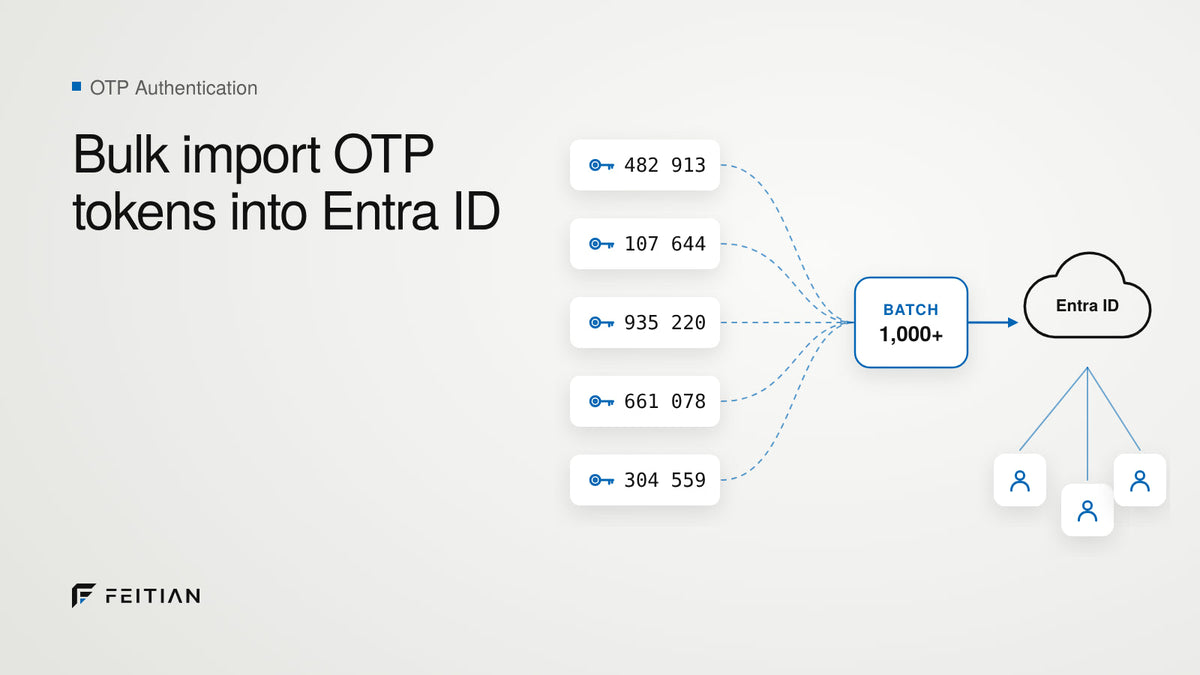
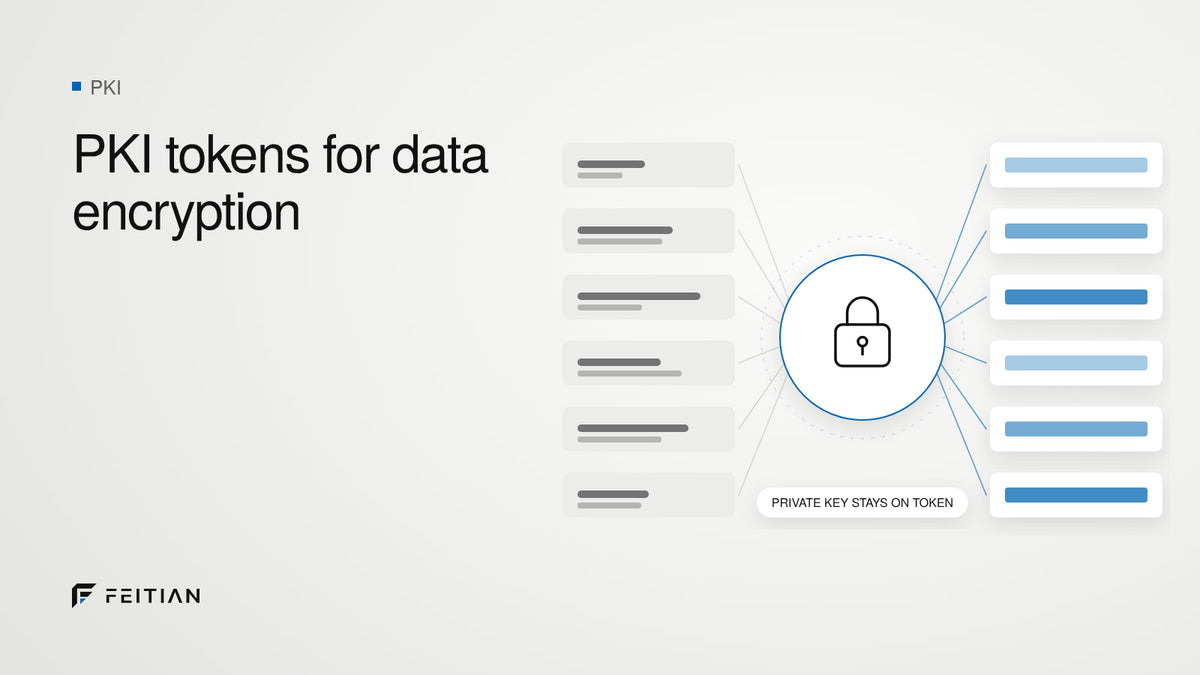
Beyond FIDO security keys, FEITIAN offers OTP tokens that generate one-time passwords for two-factor login and PKI tokens that store digital certificates for cryptographic authentication. Learn how certificate-based tokens are deployed in our guide to PKI tokens for digital certificates.
Share:
Unveiling the Realm of Identity-based Cyber Attacks