

Security Insights
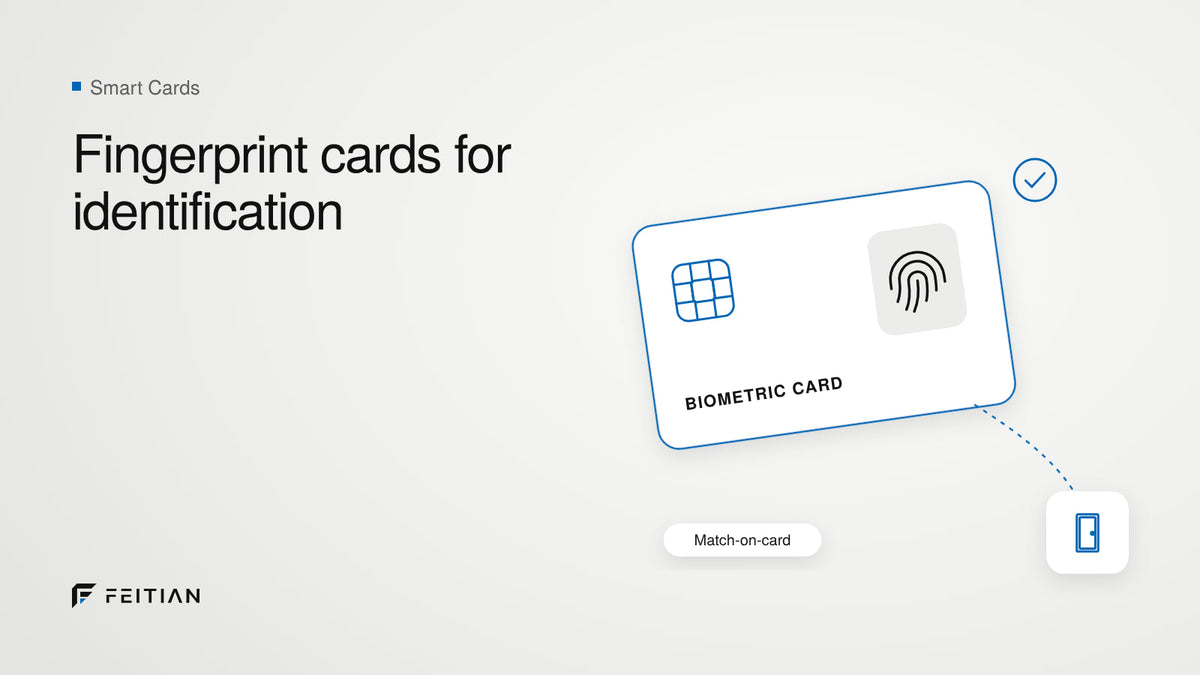
Fingerprint Cards for Identification: A Guide to Biometric Smart Cards
A badge alone can’t verify who’s using it. Fingerprint-enabled smart cards add that layer of security by verifying the cardholder’s fingerprint before granting access to a door or system. This helps prevent unauthorized use of lost, stolen, or shared cards. This guide covers how fingerprint smart cards work, the differences between match-on-card and match-on-host verification, the enrollment process, and the standards to consider when choosing a solution.
Read moreabout Fingerprint Cards for Identification: A Guide to Biometric Smart Cards
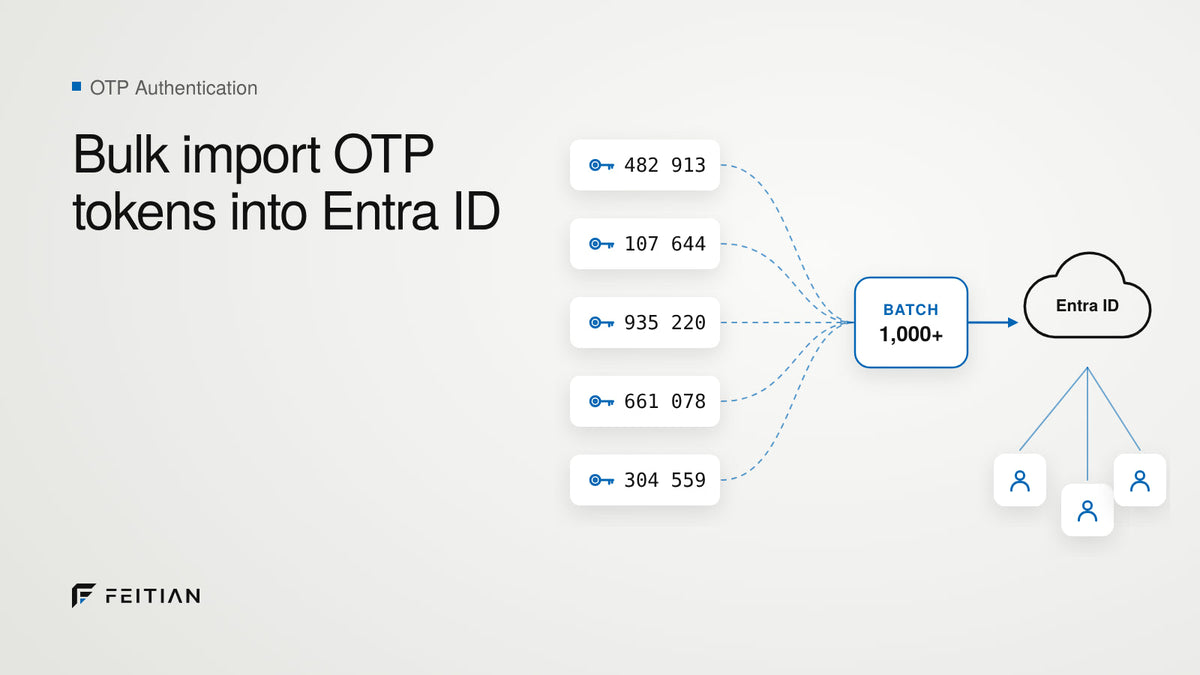
Bulk Import OTP Tokens into Microsoft Entra ID with OTPProvision
Adding hardware OTP tokens to Microsoft Entra ID is easy for ten users and slow for a thousand. Every token has a secret seed, a serial number and an owner, and each one has to reach the right account in the right format before anyone can sign in. FEITIAN OTPProvision batch imports OTP token seeds into Entra ID, so your team does not enter tokens manually, one at a time. This guide shows what the manual route involves, where it breaks, and how a batch import changes the work. Still choosing a token? Start with our guide to the best hardware OTP tokens.
Read moreabout Bulk Import OTP Tokens into Microsoft Entra ID with OTPProvision
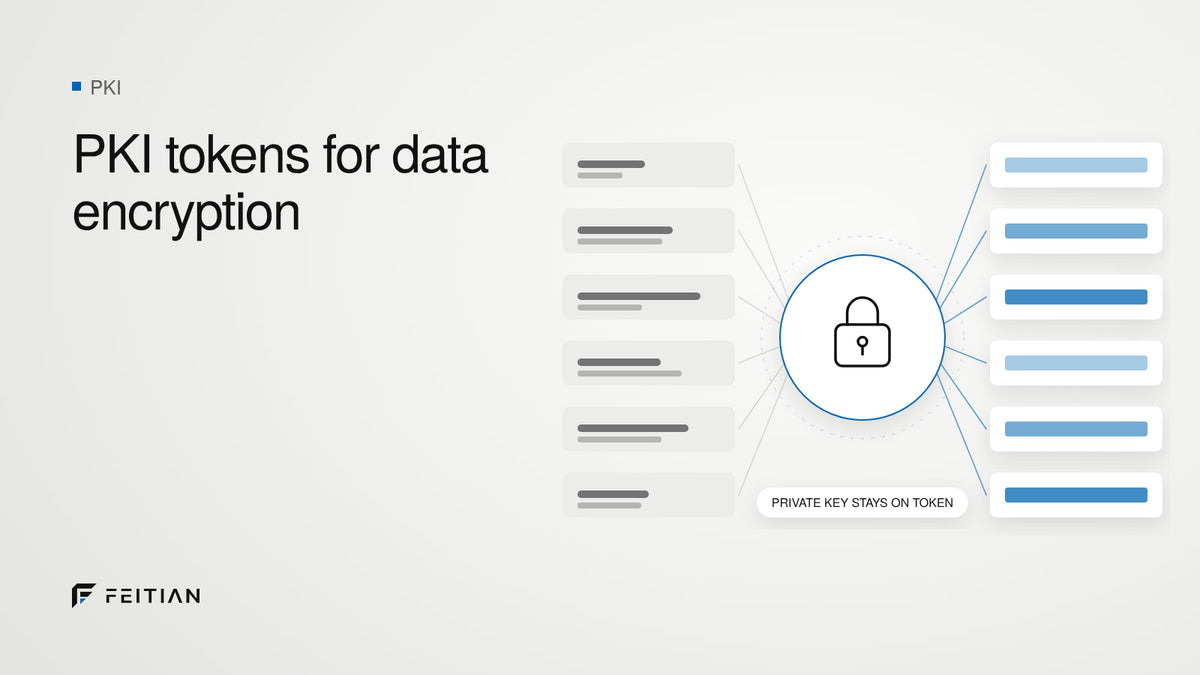
PKI Tokens for Data Encryption: A Selection Guide
Can you recommend PKI tokens for data encryption? Yes, but the right token depends on three questions: where the private keys must live, which applications will call the token, and which certifications your auditors expect. A PKI token is a USB device with a secure smart card chip that generates and stores your private keys, so encryption and signing happen inside hardware that nobody can copy. This guide compares PKI tokens on the points that decide real projects and shows you how to configure one.
Read moreabout PKI Tokens for Data Encryption: A Selection Guide
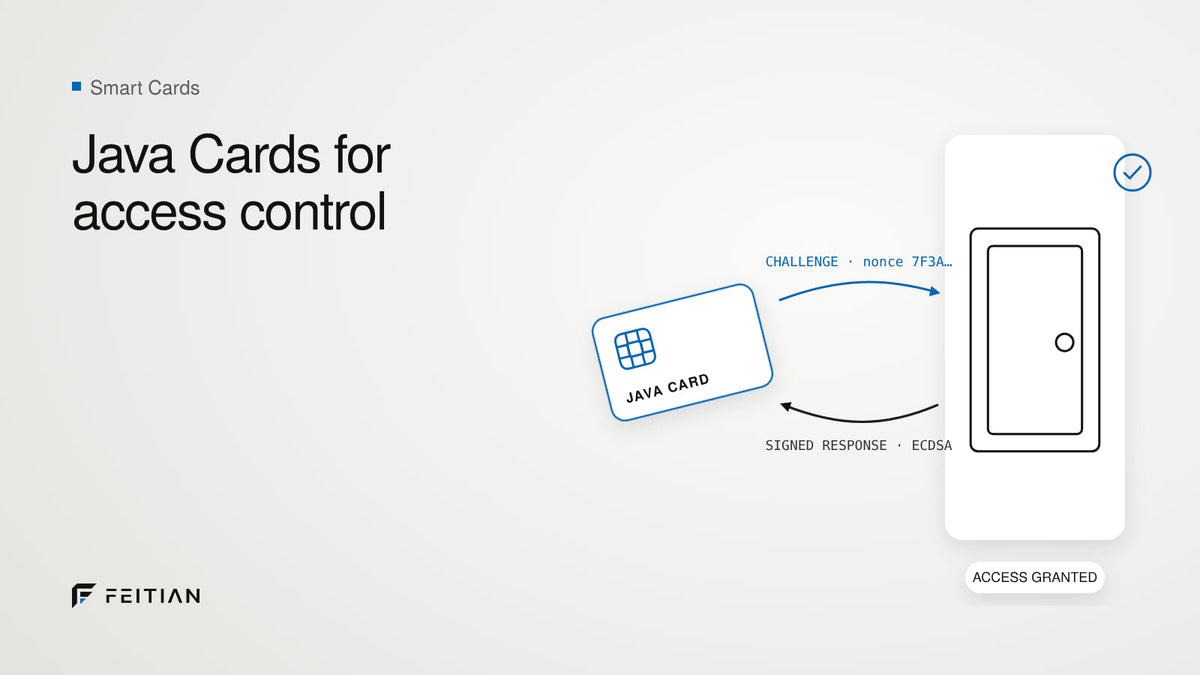
Java Cards for Access Control: A Developer's Guide
Door badges that only carry a serial number are easy to clone. Java Cards for access control replace that number with a cryptographic exchange: the card proves it holds a secret key, and the reader never sees the key itself. Because Java Card is programmable, you can also run your access applet next to PKI login or payment applets on the same chip. This guide walks you through the design of an access-control applet, GlobalPlatform provisioning, security domain setup and the integration work with door readers.
Read moreabout Java Cards for Access Control: A Developer's Guide

DCCSupply Now Offers TSYS-Certified FEITIAN Payment Terminals
TSYS MultiPass certification complements existing Fiserv Nashville support, expanding terminal options for payment providers, resellers, and merchants.
Read moreabout DCCSupply Now Offers TSYS-Certified FEITIAN Payment Terminals
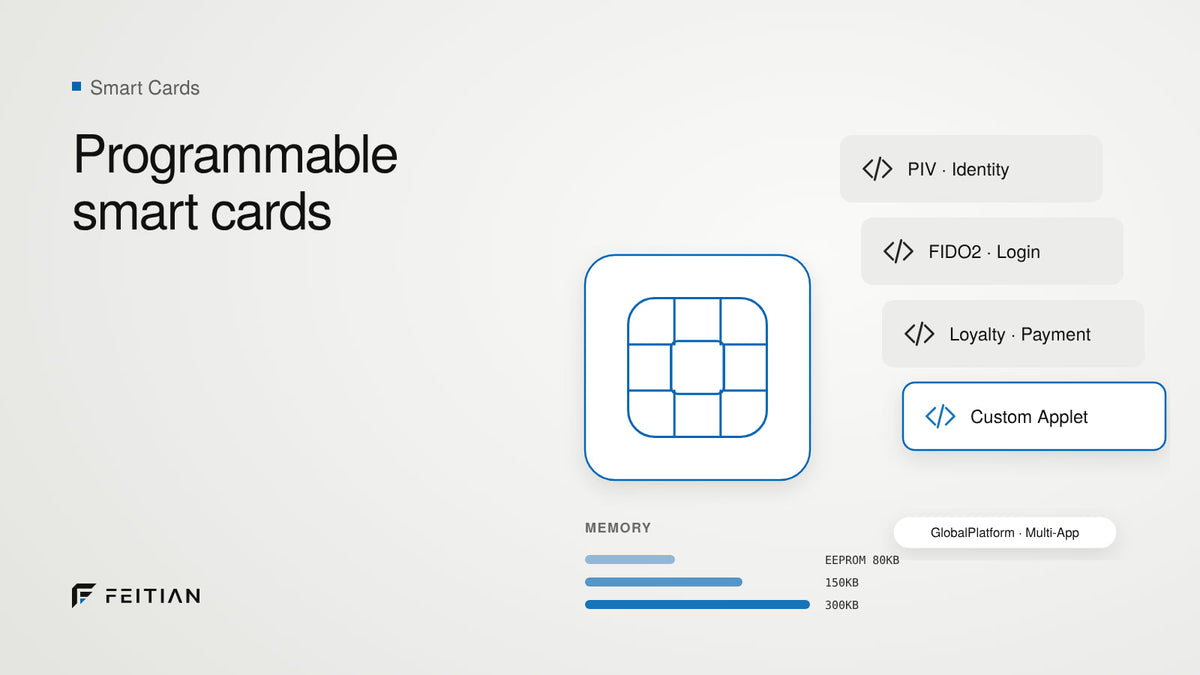
Best Programmable Smart Cards: A Java Card Buyer's Guide
What are the best programmable smart cards? For most teams building ID, PKI or multi-application card programs, the answer is a Java Card: a smart card that runs your own applets on an open, standard platform instead of locking you into one vendor's fixed functions. Choosing between Java Cards still takes care. Memory, chip, cryptographic support and security certification decide whether a card fits your project or stalls it. This guide compares FEITIAN's Java Cards on those points and walks you through development requirements and multi-application setup.
Read moreabout Best Programmable Smart Cards: A Java Card Buyer's Guide
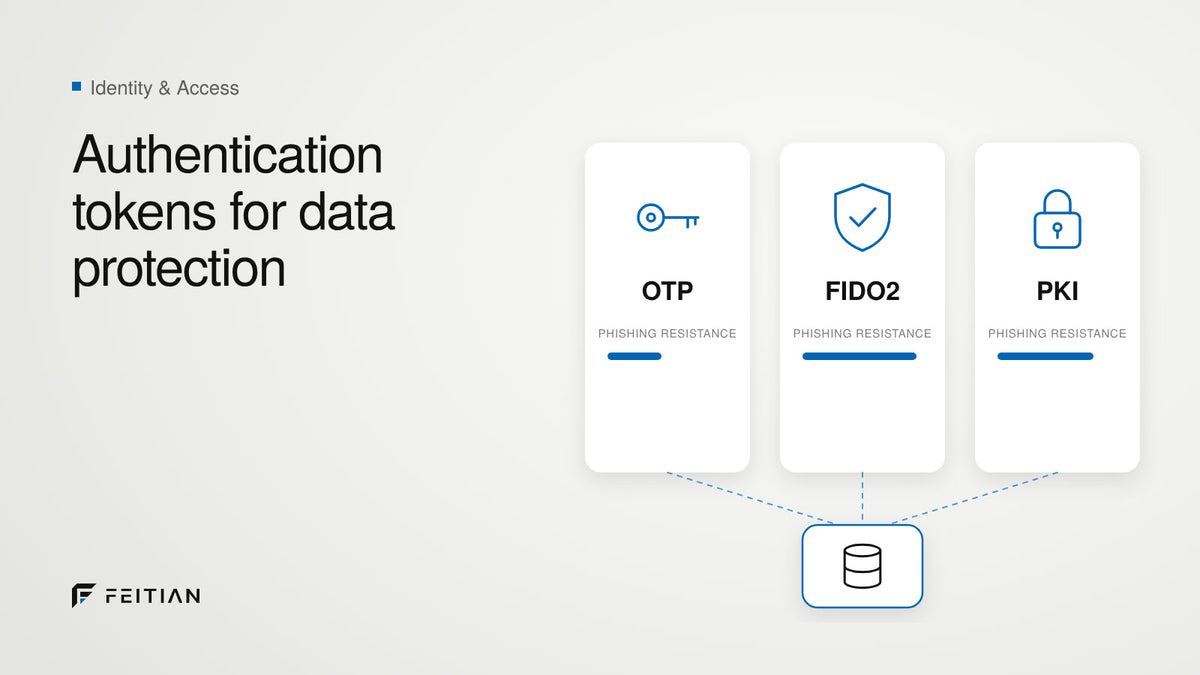
Authentication Tokens for Data Protection: A Complete Guide
Your data is only as safe as the login that guards it. Authentication tokens for data protection put a physical object between an attacker and that login: something a person must hold on top of something they know. Hardware tokens come in three main families, OTP, FIDO2 and PKI, and each one blocks a different set of attacks. This guide compares them side by side so you can match the token to the data, the users and the rules you need to meet.
Read moreabout Authentication Tokens for Data Protection: A Complete Guide

FIDO2 Security Key Lifecycle Management: Buy, Set Up, Optimize, Upgrade
Most security key projects plan the rollout and stop there. Then, keys get lost, people leave, new laptops arrive with different ports and an auditor can't accurately track active keys. FIDO2 security key lifecycle management covers everything after the purchase order: setup, backup and recovery, ongoing optimization, replacement and upgrades. This guide gives you a policy and a checklist for each of the four stages, so your keys keep protecting accounts for years.
Read moreabout FIDO2 Security Key Lifecycle Management: Buy, Set Up, Optimize, Upgrade
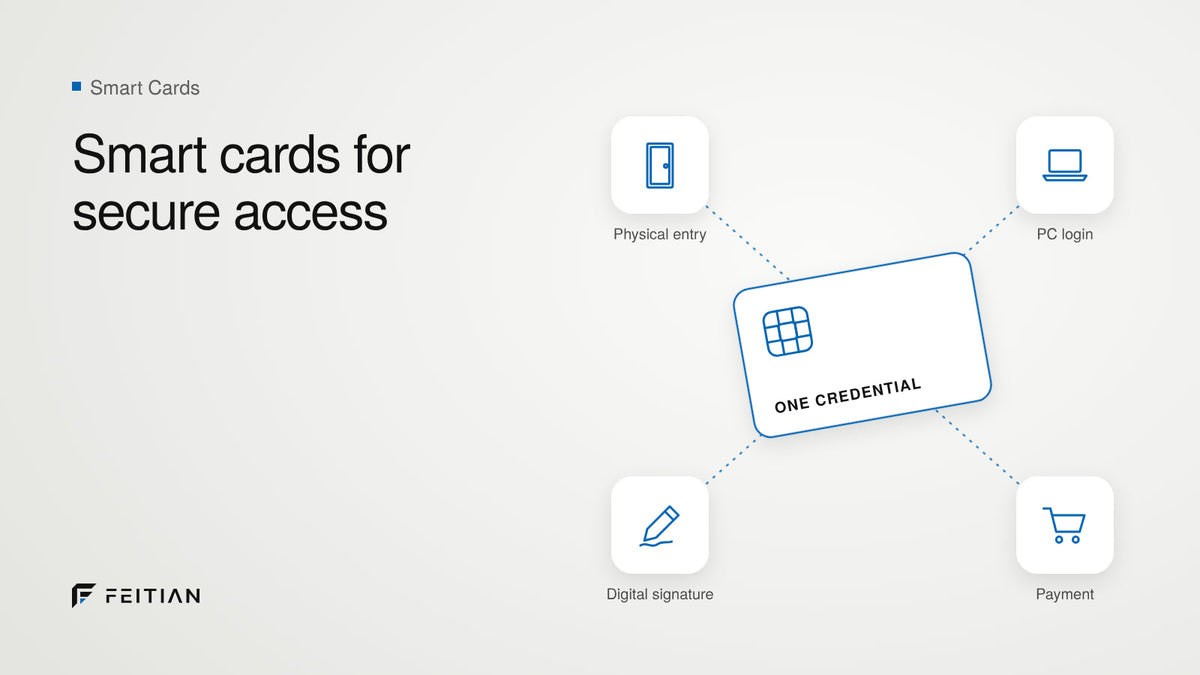
Smart Cards for Secure Access: An Enterprise Buyer's Guide
The badge on your employees' lanyards can do far more than open a door. Smart cards for secure access combine physical entry, computer login, digital signatures and even payments on one credential, if you choose the right card type. The wrong choice can result in cards being cloned by thieves, a mismatch between a card and a reader, or required deployment of new cards when systems are updated or changed. This guide compares the main card technologies, explains government PIV requirements, and gives you a checklist for buying cards and readers that work together.
Read moreabout Smart Cards for Secure Access: An Enterprise Buyer's Guide